Updated May 2026
With energy costs rising across East Texas, the last thing you want is your HVAC system working against you. The good news? Many of the most expensive HVAC problems aren’t caused by major equipment failures, they’re caused by small, avoidable mistakes that quietly inflate your utility bills month after month.
At East Texas Refrigeration (ETR), we’ve been servicing homes in Tyler, Longview, and Athens for decades. We see the same costly habits repeatedly. In this guide, we’ll walk you through the five most common AC and HVAC mistakes homeowners make, explain why each one matters, and give you practical steps to fix them today.
From learning how to properly use your programmable thermostat, to cleaning/replacing your air conditioner filters and cleaning ductwork, to using state of the art products and diagnostic equipment to determine what’s happening in your HVAC unit, East Texas Refrigeration in Tyler, Texas, wants to help make sure you don’t make these mistakes.
Here are 5 Air Conditioning and HVAC mistakes you can easily avoid!
Mistake #1: Why a Dirty Air Filter Costs You More Money
Of all the HVAC mistakes homeowners make, neglecting the air filter is both the most common and the most costly. It’s also the easiest to fix.
Why It Matters
Your air filter is the first line of defense for your HVAC system, trapping dust, pollen, pet dander, mold spores, and debris before they can reach your equipment. When the filter gets clogged, airflow is restricted and everything downstream suffers.
A dirty filter forces your AC unit to work harder to pull air through. That extra strain translates directly into higher electricity consumption. According to the U.S. Department of Energy, replacing a clogged filter can lower your air conditioner’s energy consumption by 5% to 15%. In the East Texas heat, where your unit may run 8 to 12 hours per day during summer, that adds up fast.
What It Could Cost You
Beyond higher monthly bills, a neglected filter can trigger a chain reaction of more serious problems:
- Dirty evaporator coils that lose efficiency and may eventually freeze over
- Reduced airflow that causes the system to short-cycle (turn on and off repeatedly), wearing out the compressor
- Premature blower motor failure from running at elevated stress levels
- Complete system failure requiring a costly replacement years before it would otherwise be needed
A new filter costs $10–$30. A new HVAC system can run $8,000–$20,000. The math is simple.
What to Do
Check your filter every 30 days especially during heavy-use seasons (summer and winter). Replace it when it looks visibly gray or dusty. As a general rule:
- Basic 1-inch fiberglass filters: replace every 30 days
- Mid-grade pleated filters: replace every 60–90 days
- High-efficiency filters (MERV 11+): replace every 90–120 days
ETR Tip: East Texas is notorious for pollen season and dust. If you have pets or allergies, check your filter every 3–4 weeks regardless of filter type. We also recommend scheduling a professional HVAC tune-up in spring and fall so a technician can inspect the filter and entire system before peak season.
Mistake #2: Not Using Your Programmable Thermostat Correctly
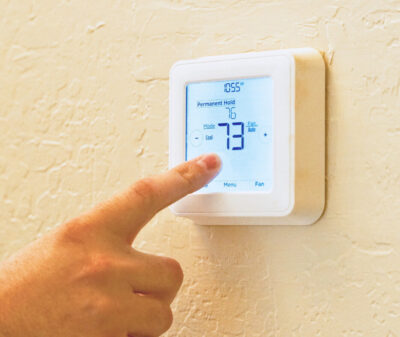
If your home has a programmable or smart thermostat and you’re not using its scheduling features, you’re essentially paying to cool or heat an empty house all day, every day.
Why It Matters
Heating and cooling account for roughly 50% of the average home’s energy bill. A programmable thermostat lets you automatically adjust the temperature based on when you’re home, asleep, or away; so your system isn’t working harder than it needs to.
The EPA estimates that using a programmable thermostat correctly can save homeowners around $180 per year on energy bills. In East Texas, where summer temperatures regularly push past 95°F and AC usage is especially high, the savings can be even greater.
Common Thermostat Mistakes
- Leaving the thermostat at one constant temperature all day and night
- Setting the temperature too low in summer thinking it will cool faster — it won’t, it just runs longer
- Not using zone-specific settings if you have a multi-zone system
- Raising the heat dramatically when you get home instead of using a schedule to pre-warm/pre-cool gradually
What to Do
Set up a schedule that matches your household routine. A practical approach for East Texas summers:
- 7:00 AM – 8:00 AM: Cool to 74°F before the family leaves for work/school
- 8:00 AM – 5:00 PM: Set to 78–80°F while the house is empty
- 5:00 PM: Begin pre-cooling back to 74°F before arrival
- 10:00 PM – 6:00 AM: Set to 76°F overnight (nights are cooler; fans can assist)
Each degree you raise the thermostat while you’re away saves approximately 1% on your cooling costs. Small adjustments compound over a full summer.
ETR Tip: If you still have an older manual thermostat, upgrading to a smart thermostat like a Trane ComfortLink II or Ecobee is one of the best investments you can make for long-term energy savings. Some utility companies in East Texas also offer rebates for smart thermostat installations.
Mistake #3: Ignoring Your Outdoor Unit
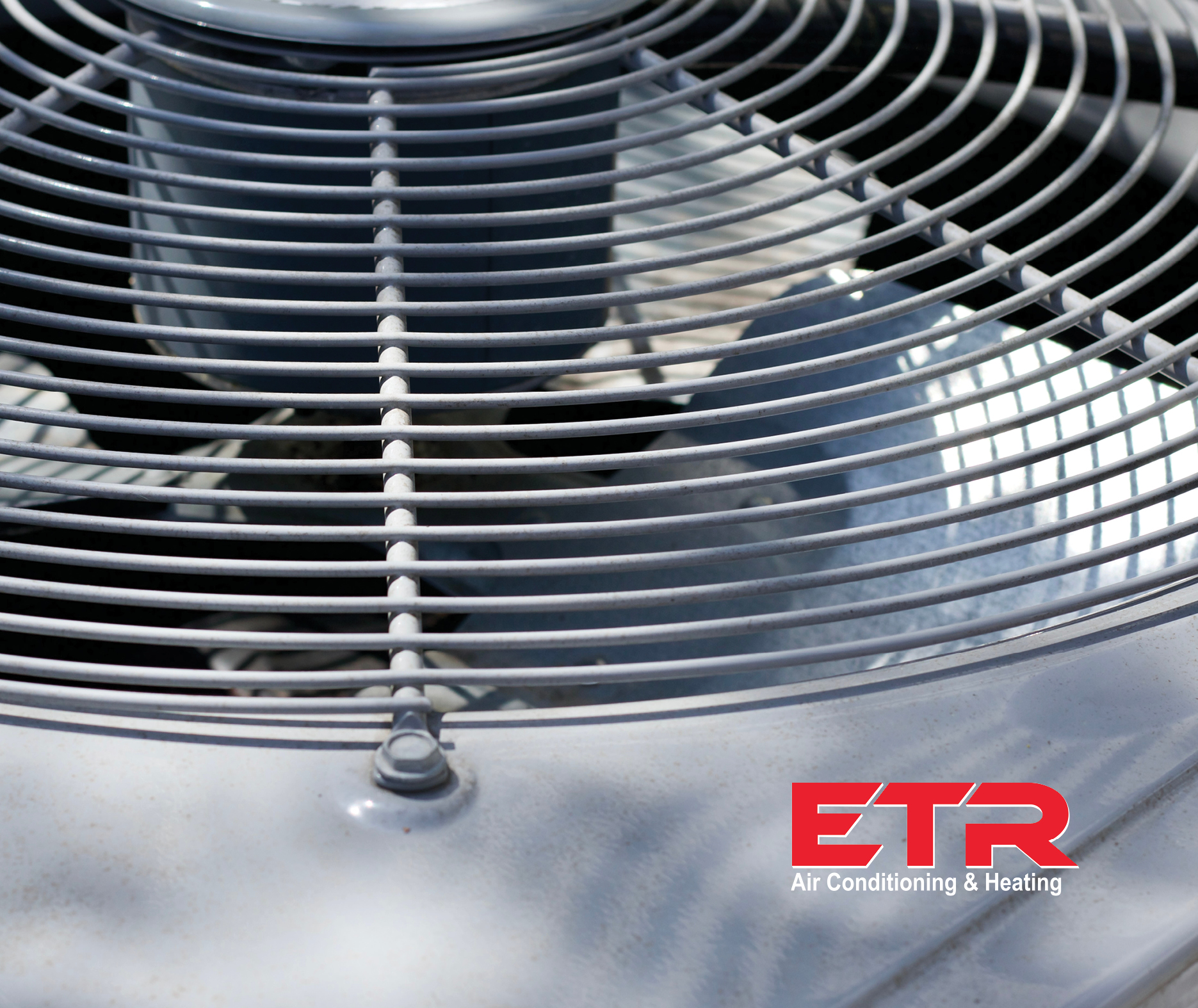
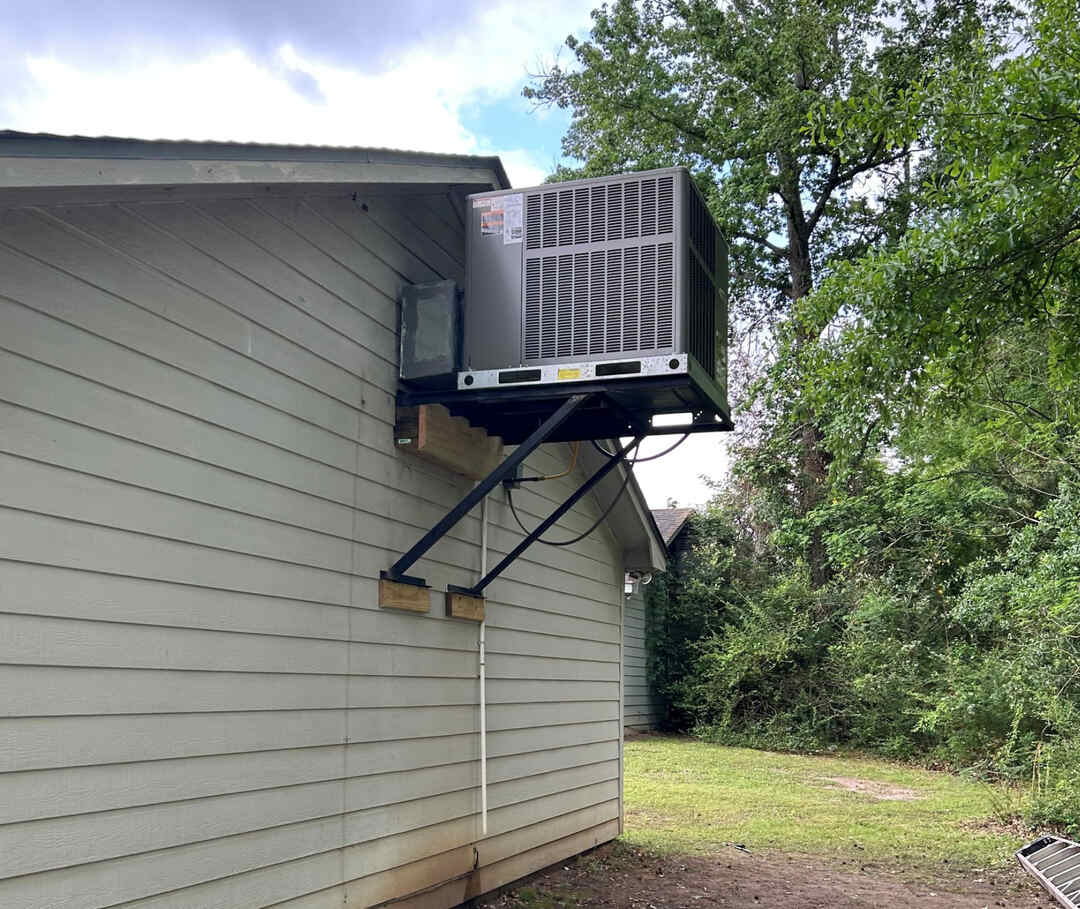
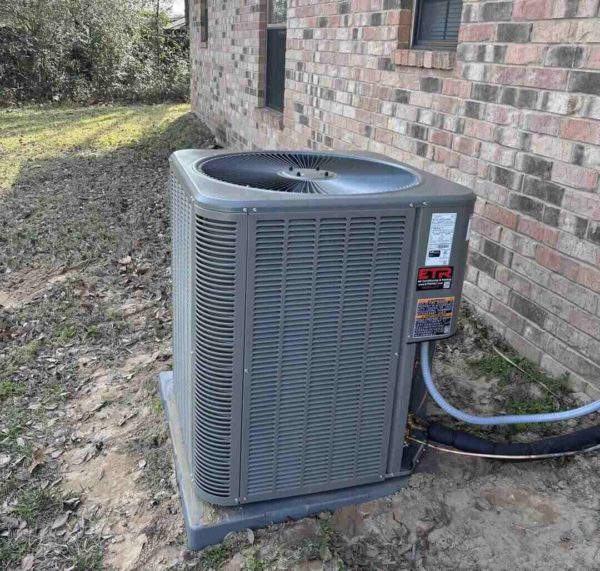
Your outdoor condenser unit does the heavy lifting of releasing heat from your home. Yet many homeowners never think about it until something goes wrong.
Why It Matters
The outdoor unit needs unobstructed airflow to do its job. When the unit is blocked by overgrown shrubs, surrounded by tall grass, or caked with debris, it can’t release heat efficiently which means your system has to run longer and work harder to achieve the same result. This is called high head pressure, and it’s one of the leading causes of compressor failure.
Common Outdoor Unit Problems
- Overgrown shrubs or vines growing into or around the unit
- Leaves, cottonwood fluff, or grass clippings packed into the condenser fins
- Mulch, dirt, or lawn edging too close to the base, restricting bottom airflow
- Lawn furniture, storage items, or fencing blocking one or more sides
- Damaged or bent condenser fins reducing heat exchange efficiency
What to Do
- Keep at least 2 feet of clearance on all sides of the outdoor unit, and 5 feet above it
- Trim back any shrubs or plants regularly, especially fast-growing varieties
- Gently rinse the condenser fins with a garden hose (from the inside out) once a year to remove dust and debris never use a pressure washer
- After storms, check for leaves, sticks, or debris that may have collected around or inside the unit
- Schedule professional coil cleaning as part of your annual maintenance a technician can safely clean areas that are difficult to reach
ETR Tip: It’s tempting to hide your outdoor unit behind a decorative fence or wall of plants for aesthetic reasons. If you do, make sure any enclosure is open-slatted and maintains proper clearances. A blocked unit can increase your cooling costs by 10–20% and significantly shorten the life of your compressor.
Mistake #4: Skipping Scheduled HVAC Maintenance
Preventative maintenance is the single most effective thing you can do to extend the life of your HVAC system, keep it running efficiently, and avoid surprise breakdowns especially on the hottest day of the year when you need it most.
Why It Matters
An HVAC system has dozens of mechanical and electrical components: capacitors, contactors, refrigerant lines, drain pans, blower motors, heat exchangers, belts, and more. Any one of these can degrade gradually in ways that aren’t obvious until they cause a failure. A trained technician can identify and fix issues while they’re minor before they become expensive.
Industry data consistently shows that systems receiving annual maintenance last 30–50% longer than those that don’t. A system that might otherwise last 15 years can run 20+ years with proper care.
What Happens During a Professional HVAC Tune-Up
A comprehensive maintenance visit from ETR includes:
- Inspecting and cleaning the evaporator and condenser coils
- Checking refrigerant levels and inspecting for leaks
- Testing electrical connections and inspecting capacitors and contactors
- Lubricating moving parts to reduce friction and wear
- Cleaning the condensate drain line to prevent water damage and mold
- Inspecting the heat exchanger for cracks (critical for carbon monoxide safety)
- Testing thermostat calibration and system controls
- Replacing the air filter if needed
When to Schedule
The best practice is twice a year: once in spring before the cooling season, and once in fall before the heating season. This ensures your system is in peak condition for the demands of East Texas summers and winters.
ETR Tip: ETR’s Energy Savings Agreement (ESA) plan covers bi-annual maintenance visits, priority scheduling, and discounts on repairs. It’s one of the most cost-effective ways to keep your system running at its best year-round. Ask us about enrollment.
Mistake #5: Holding On to an Aging, Inefficient HVAC System
This is the most emotionally difficult mistake on the list because replacing an HVAC system is a significant investment. But continuing to run an old, inefficient unit often costs more in the long run than replacing it sooner.
Why It Matters
HVAC efficiency is measured by SEER (Seasonal Energy Efficiency Ratio) for cooling systems. Older systems installed 12–15+ years ago often have SEER ratings of 8–10. Modern systems are required by federal law to meet a minimum SEER2 rating of 14.3–15.2 (depending on region), and high-efficiency systems can reach SEER2 ratings of 20–25+.
The difference in efficiency is dramatic. Replacing a SEER 10 system with a SEER 20 unit could cut your cooling costs nearly in half. In East Texas, where your AC may run 6–9 months per year, that’s a substantial annual savings.
Signs It’s Time to Replace Your HVAC System
- The system is 12–15 years old or older
- Repair costs are exceeding 50% of the value of the unit (use the ‘5,000 Rule’: multiply the repair cost by the age of the unit; if it exceeds $5,000, replacement is likely better)
- Your energy bills have been steadily climbing despite normal usage
- The system requires frequent repairs more than once a year
- Some rooms are consistently too hot or too cold no matter what you do
- The unit uses R-22 refrigerant (phased out in 2020; now expensive and hard to source)
The Financial Case for Upgrading
A new high-efficiency Trane or Lennox system from ETR can deliver:
- 15–35% reduction in monthly energy bills
- Improved humidity control (a major comfort factor in East Texas summers)
- Rebates from manufacturers and utility companies that offset upfront costs
- Financing options that make the transition manageable
- Peace of mind with a full manufacturer’s warranty and ETR’s installation guarantee
ETR Tip: Not sure whether to repair or replace? Our technicians can run a cost-benefit analysis on your current system and walk you through your options with no pressure. We install Trane, Lennox and Daikin systems and can match you with the right unit for your home size and budget.
Need Help From a Local HVAC Expert?
East Texas Refrigeration has been serving Tyler, Longview, and Athens for over 45-years. Whether you need a filter check, a full system tune-up, or advice on whether it’s time for a new unit, our team is ready to help.
Call us today:
- Tyler: (903) 581-3771
- Longview: (903) 720-0048
- Athens: (903) 292-0357
You can also schedule a service call online anytime.